Fisheries within ESFJC District
Almost every type of fishing, except for scallops and nethrops, is carried out somewhere within the District.
From Donna Nook in the north to Gibraltar Point at the entrance to the Wash, the lack of suitable harbours means that the local vessels are all small beach launched boats. Effort is mainly directed at demersal species such as cod & rays using long-lines, gill and trammel nets, and potting for crabs and lobsters.
 Fishermen
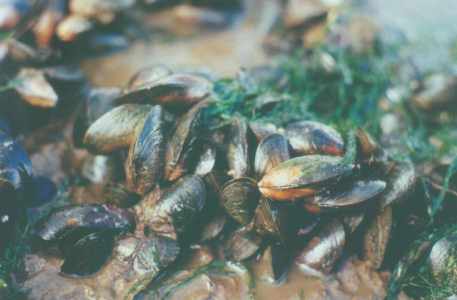
within the Wash devote most of their time to fishing for cockles, mussels
and shrimps although the large double-beam trawl shrimp vessels range throughout
the District as stocks dictate. Demand for all three species, mainly for Continental
markets, has increased rapidly in recent years leading to heavy investment
in vessels and sophisticated equipment both afloat and ashore. In turn this
has resulted in unprecedented pressure being placed on stocks particularly
the sedentary cockles and mussels. Both these species are managed through
the provisions of the Wash Fishery Order which came into force on 4th January
1993.
Fishermen
within the Wash devote most of their time to fishing for cockles, mussels
and shrimps although the large double-beam trawl shrimp vessels range throughout
the District as stocks dictate. Demand for all three species, mainly for Continental
markets, has increased rapidly in recent years leading to heavy investment
in vessels and sophisticated equipment both afloat and ashore. In turn this
has resulted in unprecedented pressure being placed on stocks particularly
the sedentary cockles and mussels. Both these species are managed through
the provisions of the Wash Fishery Order which came into force on 4th January
1993.
Under the terms of this Order the Committee, working in close co-operation with the industry itself, can close shellfish beds, allocate areas of intertidal flats to individual fishermen for the cultivation of shellfish, impose quotas and limit the number of vessels licensed to work the beds.
 Along
the North Norfolk coast fishermen utilise the nutrient rich and pollution
free waters of the many creeks to cultivate mussels and pacific oysters and
the fleets from Brancaster and Wells are engaged in the offshore whelk, crab
and lobster fisheries. Further along the coast the beach launched crab boats
fish the inshore crab grounds supplying both the tourist trade and the processing
factories centred at Cromer. Many of these boats lay up for the winter while
others join those from Caister and Great Yarmouth in fishing for herring.
Cod, rays and dogfish also figure prominently in Great Yarmouth landings,
with the long-line vessels fishing up to 60 miles offshore, weather permitting.
Fish caught on these lines, which may carry 250 hooks per line, are of a better
quality than those trawled as the latter are often damaged in the nets.
Along
the North Norfolk coast fishermen utilise the nutrient rich and pollution
free waters of the many creeks to cultivate mussels and pacific oysters and
the fleets from Brancaster and Wells are engaged in the offshore whelk, crab
and lobster fisheries. Further along the coast the beach launched crab boats
fish the inshore crab grounds supplying both the tourist trade and the processing
factories centred at Cromer. Many of these boats lay up for the winter while
others join those from Caister and Great Yarmouth in fishing for herring.
Cod, rays and dogfish also figure prominently in Great Yarmouth landings,
with the long-line vessels fishing up to 60 miles offshore, weather permitting.
Fish caught on these lines, which may carry 250 hooks per line, are of a better
quality than those trawled as the latter are often damaged in the nets.
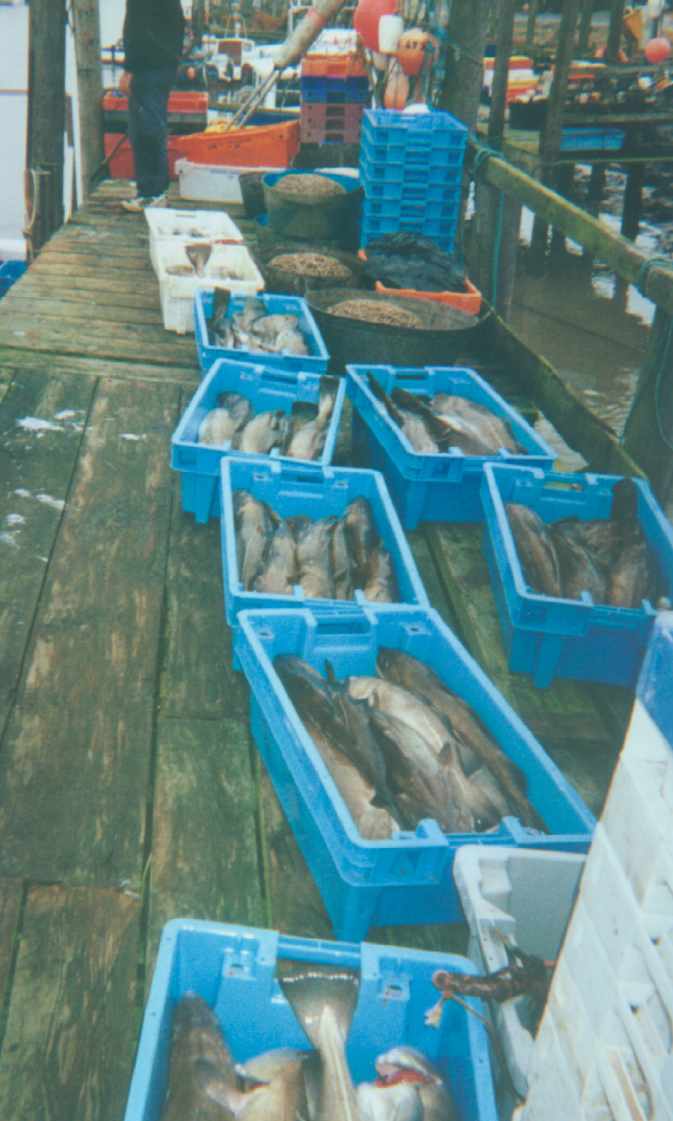 Lowestoft
is the largest port within the Committee’s District and accounts for
the greater proportion of landings particularly of the demersal species though
the fortunes of the fleet have diminished over recent years.
Lowestoft
is the largest port within the Committee’s District and accounts for
the greater proportion of landings particularly of the demersal species though
the fortunes of the fleet have diminished over recent years.
The Suffolk harbours of Southwold, Aldeburgh and Felixstowe
Ferry all contain active fleets which, together with beach launched boats
from places such as Kessingland and Dunwich, trawl, long-line and pot for
cod, plaice, rays, sole, crabs and lobsters following a pattern that has changed
little over the years.
At the southernmost end of the District the rivers Deben, Stour and Orwell are fished for shrimps, sole and eels and provide sheltered water for the cultivation of oysters.